|
Links |
What is the molecular basis of chimpanzee resistance to SIVcpz? |
|
|
What is MHC and what does it do? What is the molecular basis of chimpanzee resistance to SIVcpz? Are there allelic variants in human population that are protective against HIV? How are humans adapting to selection pressures produced by HIV? What will the future bring?
|
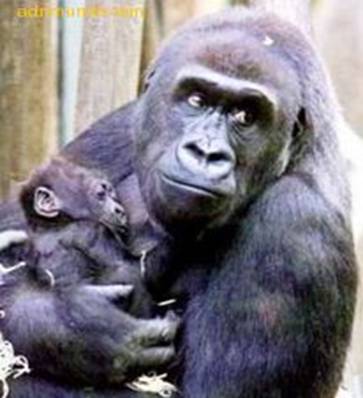 Researchers are currently investigating the mechanisms by which non-human primates have adapted to the presence of SIV. Many non-human primates do not exhibit the symptoms of AIDS after infection by SIVcpz or HIV-1 (3). The delineation of primate resistance to SIV is of chief importance as this may have implications for future human populations, due to the fact that the HIV virus is currently imposing strong selection pressure (both diversifying and positive Darwinian) on particular loci (HLA-B in particular) within the human genome (2; 4; 11) . Although chimpanzees and human display 98% sequence similarity between their genomes the mechanism by which each species copes with lentivirus infection as well as the type of selection these viruses impose on chimpanzees and humans differs dramatically (9). Lentivirus infections in chimpanzees are characterized by the absence of overt CD4 T cell loss, a lack of generalized immune activation as well as the maintenance of secondary lymphoid structure in infected lymph nodes. All of these processes are the hallmark of AIDS infection in humans (6). Recent experimental data has shown that chimpanzees display a larger degree of variation in their mtDNA in addition to their nuclear genes. This occurrence is, in part, thought to be a direct consequence of the fact that the chimpanzee species is evolutionarily older than the modern human species. In addition, the chimpanzee population landscape is extremely sub-divided, thus facilitating a situation in which a large degree of variation accumulated within the chimpanzee genome relative to the human genome. Furthermore, research has shown that humans appear to have undergone multiple population bottlenecks, which are known to reduce genetic diversity (2). de Groot and colleagues compared MHC class I gene intro variation in chimpanzees and humans (2). Their analysis showed that chimps have undergone a severe reduction in the number of orthologues of the HLA-A, HLA-B and HLA-C alleles. Additionally, the chimpanzee locus Patr-B which is orthologous to HLA-B was determined to have lost various alleles due to intense purifying selection (2; 3). The researchers also noted that the reduction in variability occurred before chimpanzee sub-speciation and that it did not appear to influence other gene systems, thus it was inferred that the HLA alleles underwent a selective sweep (2; 6). In light of these finding it was hypothesized that a pathogen was the force driving the reduction in HLA alleles in chimps (2; 5; 6). As a direct consequence of the proposed epidemic, only alleles that served a protective function were able to pass through the genetic bottleneck imposed by the virus, hence decreasing variability at the Patr loci (2). Specifically, the authors contend that SIVcpz is a prime candidate for the selective sweep due to the seemingly innate ability of chimpanzees to effectively combat the SIVcpz virus (2; 3). As previously mentioned, chimpanzees typically display a relatively higher level of genetic diversity then humans, except for at specific loci which are thought to have undergone a selective sweep (2; 3). One of the loci that show a limited amount of diversity in chimps is that of the CC chemokine receptor 5 (CCR5). CCR5 encodes a cell-surface protein receptor that is exploited by the HIV-1 virus while the virus attempts to gain access to several types of leukocytes (12). Numerous allelic variants of the CCR5 gene have been linked to increased susceptibility to the HIV-1 virus, as these particular variants may increase the rate at which HIV-1 can enter white blood cells (12). Mutations that inhibit the expression of functional CCR5 receptors of the cell surface (ex CCR5-∆32 mutations) bestow virtually complete protection for the HIV-1 virus. Furthermore, polymorphisms in the 5’ cis-regulatory region of CCR5 (5’CCR5) has been correlated with a slow rate of disease progression in individuals infected with HIV-1 (3; 12). Similar to its progenitor, SIVcpz utilizes CCR5 receptors to facilitate entry into with blood cells: however, infection in chimpanzees is infrequent and non-pathogenic. Additionally, wild chimps that have been experimentally exposed to HIV-I infrequently exhibit immunodeficiency. Wooding et al. investigated the different 5’CCR5 variants present in human and chimpanzee populations in an effort to determine the protection against HIV-1 infection afforded by specific variants. Π, a measure of genetic diversity based on the mean pairwise difference (per nucleotide) between sequences, was calculated to asses the difference in 5’CCR5 variability between humans and chimpanzees (12). The results of the analysis estimated the value of Π for chimp 5’CCR5 to be lower than that of the majority loci in the chimpanzee genome. Moreover, the approximated Π value 5’CCR5 was 4 times lower in chimpanzees than humans (12). Additionally, the aforementioned results imply that the reduced diversity seen at the chimpanzee 5’CCR5 loci is evidence of a selective sweep. Consistent with the hypothesis put forth by de Groot et al., the authors suggest that SIVcpz is the casual agent of the selective sweep (2; 12). Furthermore Wooding et al. proposed a position for a possible target in the 5’CCR5 regions on which selection could act (12). This target is an AàG transition that eliminates the splice site of exon 2A, thus the protein CCR5A is not produced, however the transition does not affect production of CCR5B (12). In humans, the A variant is fixed however a polymorphism exist in chimpanzees at this site. 90% of chimpanzees have the G variant while a mere 10% carry the A variant (12). It was thus insinuated that the A variant may confer increased susceptibility to the development of immunodeficiency (12).
|