|
Links
|
What is HIV? |
|
|
What is MHC and what does it do? What is the molecular basis of chimpanzee resistance to SIVcpz? Are there allelic variants in human population that are protective against HIV? How are humans adapting to selection pressures produced by HIV? What will the future bring?
|
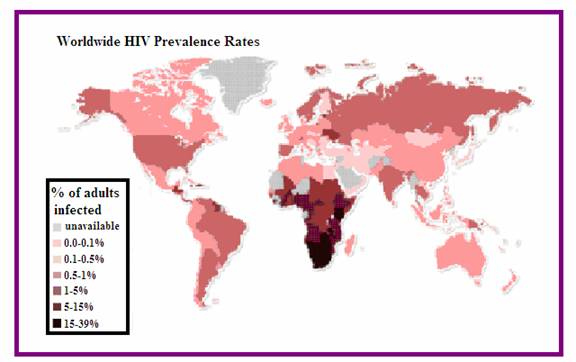
The human immunodeficiency virus (HIV), a powerful retrovirus, is unquestionably situated at the core of one of the most devastating epidemics in written history (8). At present, it is estimated that 14,000 new HIV infections occur each day worldwide (3). The ferocity of the HIV virus is heightened by the fact that fatality rate from HIV infection currently hovers abound 90% (7). Positive selection for variation (dN > dS), high mutation rates and short replication cycles provide the HIV virus with the unique capacity to adapt to and evade most of the human body’s natural defence systems (8). Subsequent to contracting the HIV virus, the virus commences an attack on the host’s immune system, specifically CD4 T-lymphocytes. As the length of time from the initial infection increases, the HIV virus continually destroys the CD4 cells of its host. Eventually the host’s CD4 cells will decrease to quantity that is less than 14% of a normal, unaffected individual. At this point the host is considered to have acquired autoimmune deficiency disorder (AIDS). Individuals infected with AIDS are extremely vulnerable to opportunistic pathogens which will eventually kill the host. As there is presently no cure for AIDS, and at present all of the anti-retroviral medications available have limited efficacy, many scientists are interested in understanding HIV’s mechanism of action.
|