|
A brief summary … |
||
|
"How can the presence of
adaptive genes which encode increased senescence be integrated with the
current evolutionary theory of aging?" |
||
|
|
The molecular evolutionary
theory of ageing has a long history of research concerning rates of
senescence and maximum longevity and ultimately is concerned with incidences
of genetic disease. Historical explanations for the presence of ageing focus
on the reduction in natural selection power as reproduction stops and
probability of mortality increases (Kirkwood, 2002; and others). It is suggested that the
lack of selection allows mutations to accumulate as one ages. The effect of
these deleterious mutations further reduces reproductive and survival
capability and ultimately leads to death. One of the most interesting
components of the theory was the discovery of long lived mutants in C. elegans.
Single gene mutations were shown to have a pronounced effect on life span by
changing the expression of factors in a hormonal pathway. At first the
presence of mutations such as age-1
which dramatically increased lifespan seemed to contradict evolutionary
theories of ageing (Partridge and Gems, 2006). It appeared that increased
longevity would be highly adaptive in nature so the fixation of wild-type
life shortening genes could not be reconciled. However, further research
revealed a reduction in fitness if the mutants were reared in a changing and
stressful environment with starvation cycles (Walker et al.,
2000). Since similar mutations have these pleiotropic effects, it was concluded that the presence
of long-lived mutants did not conflict with classical evolutionary theory. This
website will explain the historical concepts of the evolution of ageing as
well as the role of life-history traits in modulating lifespan of long-lived
mutants. |
|
|
|
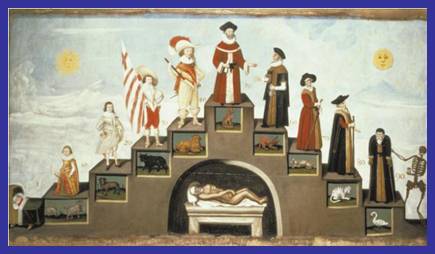
Figure 1: A representation of the twelve ages of man from birth to death. Different artists, including Shakespeare (see caption below), have depicted life as a hill to climb with the analogy that old age is physically akin to a second childhood. |
|